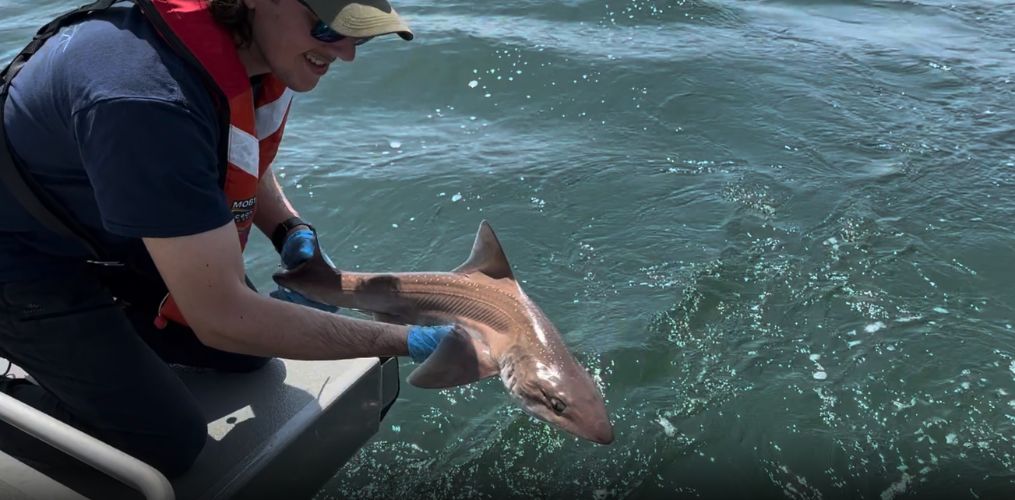
Researchers from the Flanders Marine Institute (VLIZ) and the Research Institute for Agriculture, Fisheries and Food (ILVO) are tagging sharks in the Belgian part of the North Sea to gain insights on their habits. With the support of LifeWatch Belgium and the European Tracking Network (ETN), data gathered through this work might help guide targeted protection and management actions.
By implanting small acoustic transmitters into sharks, researchers are in fact able to track their movements across borders (read this article to see how ETN makes cross-borders science possible). Moreover, they use other techniques such as ultrasound, underwater video systems, and genetics to gain other insights on reproduction, diet, species distribution and more.
So far, they have tagged over 140 typical shark species of the North Sea, like the small-spotted catshark, the starry smooth-hound, and the majestic basking shark.
Despite being top predators, and despite their crucial role in keeping the ecosystem healthy, these species are highly vulnerable due to their slow growth and low reproductive rate. Monitoring them doesn’t only provide information about their health and habits: their presence is also an important indicator of good marine biodiversity in the area.
Read the full article on LifeWatch Belgium and find out the recents results of these studies: https://www.lifewatch.be/news/tracking-sharks-north-sea-better-protection-and-management