LifeWatch ERIC Explores Synergies with the Mediterranean SOLE Energy Efficiency Project 

SOLE Project

Last week, the LifeWatch ERIC ICT-Core & FEDERTech office, located in the Cartuja Science and Technology Park in Seville, hosted partners from seven Mediterranean countries composing the backbone of the SOLE Project. It focuses on energy efficiency in public buildings, framed within the ENI CBC MED programme, and involves regional corporations, municipalities, public agencies and research centres from Italy, Egypt, Greece, Tunisia, Jordan, Spain and Lebanon. The ICT-Core & FEDERTech technological and project management team held an extensive working meeting with the 17 SOLE delegates, exploring how to model future collaborations to better face the challenges of climate change.

SOLE, “High Energy Efficiency for the public stock buildings in Mediterranean”, aims to develop joint strategies that support profitable and innovative energy rehabilitation of public buildings. The energy situation in the building sector in Mediterranean countries is critical due to the age of most buildings. A lack of renovations over time has led to high energy use in both summer and winter, increasing annual energy consumption and CO2 emissions. On a more positive note, the Mediterranean region is characterised by similar construction methods, and what’s more, thanks to its geographical position, there is a strong potential in the use of renewable energy sources.

In SOLE, the cross-border exchange of know-how will inform the Pilot Actions in selected public buildings. As explained by the coordinator of the SOLE Project, Valentina Bucchi from ANCI Toscana, and meeting coordinator Joaquín Villar from the Andalusian Energy Agency, the SOLE pilot projects are: a public nursery in Italy; the laboratories of the School of Architecture in Athens (Greece); the headquarters of the Andalusian Energy Agency in Seville; the Faculty of Engineering of Alexandria University (Egypt); a public school in Jordan; the headquarters of the municipality of Mnihla in Tunisia, and a public sports complex in Lebanon.

LifeWatch ERIC CTO, Juan Miguel González-Aranda, and LifeWatch ERIC Artificial Intelligence researcher, Rohaifa Khaldi, explained cooperation initiatives in e-biodiversity that LifeWatch ERIC is already promoting in the Mediterranean, such as support for the Arab States Research and Education Network (ASREN) in the preservation of Arab ecosystems. They also spoke about potential synergies, such as in relation to concentrated solar power generation, a technology developed by EU-Solaris ERIC.

SOLE members: Associazione Nazionale Comuni Italiani Toscana – ANCI Toscana (Italy), Agenzia Regionale Recupero Risorse (Italy), National Technical University of Athens (Greece), Federation of Egyptian Chambers of Commerce  – Alexandria Chamber (Egypt), Confederation of Egyptian European Business Associations (Egypt), Royal Scientific Society/National Energy Research Centre (Jordan), Municipality of Jounieh (Lebanon), Andalusian Energy Agency (Spain), Fédération Nationale des Villes Tunisiennes (Tunisia) and Municipalité de Mnihla (Tunisia).

Strengthening Cooperation at the AERAP Africa-Europe Science & Innovation Forum

AERAP 2023

This week, LifeWatch ERIC participated in the AERAP Africa-Europe Science and Innovation Forum, an event to reinforce the contribution of research and science through digital technologies and advance collaboration between European and African institutions through strategic innovation programmes. The forum was held in the South African Embassy in Brussels, and focused on the EU Partnership Strategy with Africa, the African Union-European Union Innovation Agenda, the EU Biodiversity Strategy for 2030, compliance with the SDGs, and the Strategy on Research Infrastructures.

LifeWatch ERIC Chief Technology Officer, Juan Miguel González-Aranda, presented in the session ‘Microbial sciences for a sustainable future’, which also featured the participation of Stefano Bertuzzi, CEO of the American Society for Microbiology; Eugene Lottering, of the National Research Foundation in South Africa, and Zeinab Osman, director general of the National Centre for Research in Sudan.

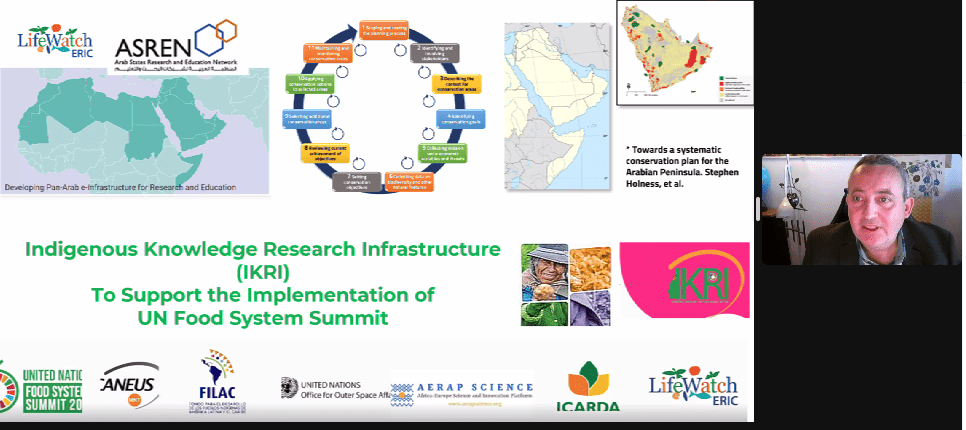
He demonstrated how LifeWatch ERIC promotes synergies in science, technology and innovation between entities and researchers from Africa and Europe, through partnership agreements which foster the green transition and access to energy. Within the AERAP platform, he co-chairs the Green Deal subgroup together with Georgina Ryan, Deputy Director for Green Economy of the Government of South Africa. Furthermore, he explained how LifeWatch ERIC cooperates with the Arab Science Research and Education Network (ASREN) and is helping the coordination of the Indigenous Knowledge Research Infrastructure (IKRI) to support the implementation of the UN Food System Summit. He also made a special mention of African researchers working in the LifeWatch ERIC Artificial Intelligence team, Rohaifa Khaldi and Yassir Benhammou, who just recently were awarded a prize at the AI4Science Workshop by a jury that included representatives from DeepMind and Google.

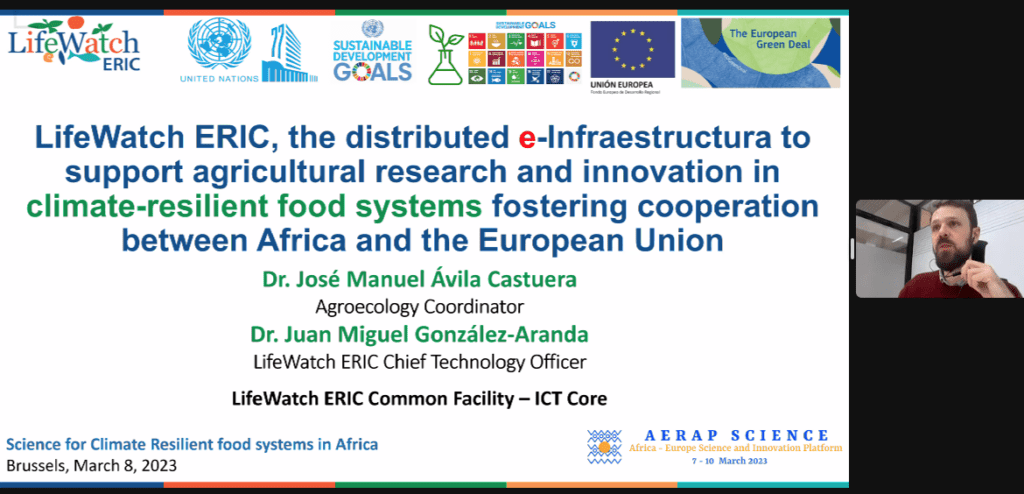
LifeWatch ERIC Agroecology Coordinator, José Manuel Ávila Castuera, spoke in the session ‘Science for Climate Resilient food systems in Africa’, which included speakers Petronella Chaminuka, Head of the Economic Analysis Unit, Agricultural Research Council of South Africa; and Intisar Soghayroun, who was Minister of Higher Education and Scientific Research in Sudan.

He explained the relevance of LifeWatch ERIC as a distributed e-Infrastructure to support agricultural research and innovation in climate-resilient food systems and foster cooperation between Africa and the EU, as a facility that provides resources and services for biodiversity and ecosystems research communities in the long-term. Likewise, he detailed the involvement of LifeWatch ERIC in the structuring of the EU partnership on agroecology, through projects such as AE4EU and ALL-READY, among others. He explained the ten elements of agroecology to change the production paradigm and achieve new models for food provisioning in a globalised context. Adoption of agroecology principles can drive towards biodiversified agroecosystems, which are more sustainable from an environmental, economic and social perspective. This whole path of innovation could facilitate the implementation of an Africa-EU Research and Innovation Partnership on Food and Nutrition Security and Sustainable Agriculture.

Voices of Women at LifeWatch ERIC for International Women’s Day

Voices of Women

In preparation for this year’s International Women’s Day, LifeWatch ERIC International Gender Officer, Africa Zanella, had a clear request: amplify women’s voices. As explored in the “Gender, Equity and Research” campaign for last year’s International Day of Women and Girls in Science, statistically, we know that while more women than ever are getting involved in STEM, there are significant obstacles still to overcome for women in research. 

In light of International Women’s Day 2023, we have therefore created a podcast miniseries specifically dedicated to learning more about authentic experiences of women working in LifeWatch ERIC fields of interest. We asked scientists from our eight member states to talk candidly about their work and experience. The guests were invited to speak in pairs, which produced spontaneous and insightful conversations on these topics, facilitated by LifeWatch ERIC podcast host, Julian Kenny. Being of all ages and hailing from a diversity of backgrounds, the end result produced is an enriching range of experiences and contemporary points of view of women working in research today. Listening to their voices, our eyes are opened to their contribution to society, to science, and the potential offered by the European Union’s Gender Equality Strategy, which LifeWatch ERIC actively supports and incorporates into its everyday work life.

The guests featured in “Voices of Women” are:

The episodes will be released over the course of the week beginning 6 March and will be consolidated with an overview and considerations from LifeWatch ERIC International Gender Officer, Africa Zanella, interviewed by Chief Communication Officer, Sara Montinaro, to be released on 8 March (International Women’s Day). This podcast will examine the progress of the infrastructure as a whole in terms of achieving gender sustainability and equity, a year on from the appointment of LifeWatch ERIC’s International Gender Officer, and explore future plans to continue the commendable and tangible work that she has already set in motion.

The podcasts are available here below. They can also be found on Spotify, Google, Apple, and Amazon.


LifeWatch ERIC supports the Regional Government of Murcia in observation and monitoring of Mar Menor ecosystems

Mar Menor

A general protocol of declaration of intent was signed by the Minister for Environment, Mar Menor, Universities and Research, Juan María Vázquez Rojas, and LifeWatch ERIC CTO, Juan Miguel González Aranda in the framework of the JRU LW.ES-Node LW.ES. This protocol is the starting point for the development of joint projects between the two institutions on the Mar Menor, Region of Murcia and Mediterranean Ecosystems.

LifeWatch ERIC will put its infrastructure for the observation and monitoring of Mar Menor ecosystems at the service of the the Regional Government of Murcia, thanks to the signature of a general protocol of declaration of intent between the Minister for the Environment, Mar Menor, Universities and Research, Juan María Vázquez Rojas, and LifeWatch ERIC CTO, Juan Miguel González-Aranda, in the framework of the JRU LW.ES-Node, LifeWatch Spain.
The specific activities foreseen by this protocol will be framed within the constitution of the LifeWatch ERIC Node in Spain, and will focus on the Mar Menor, Region of Murcia and Mediterranean Ecosystems. A Mixed Monitoring Commission will be established to define all pertaining details.


“The objective of this protocol is to integrate research on the observation and monitoring of the Mar Menor ecosystems and its surroundings, into the European virtual infrastructure for science and technology, and to facilitate, through LifeWatch ERIC, the public knowledge of its state. Monitoring data will be disseminated following transparency criteria, synergies and collaborations will be actively identified and promoted, in particular with other research groups from centres and universities specialised in the observation and development of research on marine ecosystems in a broad sense”, explained Vázquez Rojas.


It is within the objectives of this protocol to promote shared access to scientific infrastructures, multidisciplinary collaboration, integration into national and international research networks, and training, focusing on research, observation and monitoring actions of the marine ecosystem in question. Scientific and outreach events may also be organised to bring together experts in different fields of relevance.


In this context, Juan Miguel González-Aranda presented in the conference held in Murcia ‘Infrastructures for the Observation of Biodiversity and Marine Ecosystems of the Mar Menor’, organised by the Government of Region of Murcia, together with the Minister, Juan María Vazquez Rojas; the General Director of the Mar Menor, Víctor Serrano Conesa, and Manuel Erena Arrabal, Coordinator of the Geographic Information Systems and Remote Sensing Team of the Murcian Institute for Agrarian and Environmental Research and Development (IMIDA).

Horizon Europe project Blue-Cloud 2026 to enhance Open Science in support of ocean protection and restoration

Blue-Cloud 2026

Over the past decades, Europe has developed an impressive capability for aquatic environmental observation, data-handling and sharing, modelling and forecasting. This builds upon national environmental observation and monitoring networks and programmes, complemented with EU infrastructures such as the Copernicus satellite observation programme and related thematic services, the European Marine Observation and Data Network , as well as a range of environmental European RIs and major R&D projects. 

Within this framework, since October 2019, the pilot Blue-Cloud project combined both the interests of the European Open Science Cloud (EOSC), aiming to provide a virtual environment with open and seamless access to services for storage, management, analysis and re-use of research data, across borders and disciplines, and the blue research communities by developing a collaborative web-based environment providing simplified access to an unprecedented wealth of multi-disciplinary datasets from observations, analytical services, and computing facilities essential for blue science. 

Funded by Horizon Europe, Blue-Cloud 2026 aims at a further evolution of this pilot ecosystem into a Federated European Ecosystem to deliver FAIR & Open data and analytical services, instrumental for deepening research of oceans, EU seas, coastal & inland waters. It develops a thematic marine extension to EOSC for open web-based science, in support of the EU Green Deal, UN SDGs, the EU Destination Earth initiative, and the EU Mission “Restore Our Ocean and Waters by 2030”.

Blue-Cloud 2026 as a key link for EOSC and the Digital Twin of the Ocean

Over the course of 42 months starting in January 2023, the consortium is going to integrate more blue analytical services into the Blue-Cloud Virtual Research Environment, configure new thematic Virtual Labs, improving services for uptake of new data sets from a multitude of data originators and major e-infrastructures, and for discovery and access to their structured data collections.

The existing Blue-Cloud framework is already home to one of the most mature communities in EOSC, and can provide practical examples to younger communities on a variety of aspects ranging from interoperability to data federation, from FAIR practices to cross-domain interaction.

Blue-Cloud 2026 is co-coordinated by CNR and Trust-IT Services, with MARIS as technical coordinator, counting on a core team of partners such as VLIZ (focal point of LifeWatch Belgium), Ifremer, Mercator Ocean International, Seascape Belgium. Overall it mobilises a solid, multidisciplinary, committed team of 40 partners across 13 EU countries. The three-day kick-off meeting in Pisa, Italy, was hosted by CNR (National Research Council of Italy) in collaboration with Trust-IT, and provided the first official opportunity for the consortium to meet in person, take stock of the work performed in the pilot project and plan the key upcoming activities towards a successful implementation of the Blue-Cloud framework by 2026.

Read the full press release here.

Follow Blue-Cloud 2026 on Twitter, LinkedIn and YouTube.

‘SeaWomen’ expedition studying orcas and whales above the Arctic circle

SeaWomen expedition

This winter, LifeWatch Belgium provided a key contribution to the citizen science initiative ‘SeaWomen’, an expedition studying marine ecosystem change, orca and whale behaviour in northern Norway, 350 kilometres north of the Arctic Circle, during the winter herring run.

The expedition was unique in many ways. The international team of 34 was exclusively women, non-binary and two-spirit peoples, thereby empowering women and minority groups. In addition, the team represented very diverse backgrounds and skillsets that enabled an interdisciplinary programme of activity, connecting marine and wider environmental science with art, photography, storytelling and more, with the core aim of collecting new knowledge about marine ecosystems in the region and collectively raising awareness about the ocean, and the effects of climate change on the natural world.

LifeWatch Belgium and the Flanders Marine Institute (VLIZ), including Dr Elisabeth Debusschere, contributed expertise and equipment to the ‘SeaWomen’ expedition, including the loaning of a Soundtrap HF 600 (Ocean instrument), a hydrophone to monitor underwater sound, marine mammal and other marine life vocalisations. This complemented a behaviour programme focused on killer whales (Orcinus orca) and included in-water winter snorkelling to obtain photos, videos and observations of the orcas and whales, together with marine environmental measurements including ocean physics (temperature and salinity profiles) and eDNA samples.

Dr Kate Larkin (marine expert at the European Marine Observation and Data Network Secretariat) was also onboard: “This expedition was a completely new approach to positive climate action. All of the women onboard were volunteers, with a common motivation to increase knowledge and societal understanding about the Ocean, and how the Ocean and marine ecosystem is changing as a result of human impact, ranging from climate change to human activities at sea such as fishing, tourism, shipping and more. It was a pleasure to collaborate with VLIZ and LifeWatch Belgium together with other partners and the diverse team of talented women, to make this expedition a reality.”

This article was originally posted on LifeWatch Belgium by Dr Kate Larkin (EMODnet) and Dr Elisabeth Debusschere (VLIZ).

Call for Abstracts: The LifeWatch ERIC BEeS Biodiversity & Ecosystem eScience Conference

BEES Conference

Roll up, roll up! Abstracts are now open for the LifeWatch ERIC “BEeS” Biodiversity & Ecosystem eScience Conference “Threats and challenges to biodiversity and ecosystem conservation from an eScience perspective”, which is scheduled to coincide with Biodiversity Day 2023. Set in Seville, home to the statutory seat and ICT-Core of LifeWatch ERIC, the conference will take place over two and a half days from 22 May.

Submit your abstract here.

Interested persons can visit the dedicated minisite which will be regularly updated with information. The LifeWatch ERIC BEeS conference will feature keynote speeches from scientists in the community, and seven different topic plenary sessions will take place featuring submissions from the community on:

  • Major threats to the Earth’s biodiversity and ecosystem health
  • Macroecological and biogeographical approaches to biodiversity conservation
  •  Ecosystem and habitat mapping
  • Animal biology and behavioural traits
  • “System of systems” biodiversity observation
  • Biodiversity and ecosystem responses to climate change
  • Natural capital and the “One Health” approach

There will also be a round table on the theme of World Biodiversity Day, moderated by LifeWatch ERIC and keynote speakers. Please note that abstract submission will close on 30 April 2023.

While principally aimed at members of the LifeWatch ERIC national nodes, this is also a fantastic opportunity for members of the wider biodiversity and ecosystem research community to meet and get to know each other better face-to-face. Participation in the Conference is free. Sign up now!

Register here.

EU Commissioner for Innovation visits LifeWatch Bulgaria’s Agricultural University – Plovdiv

EU Innovation Commissioner Bulgaria

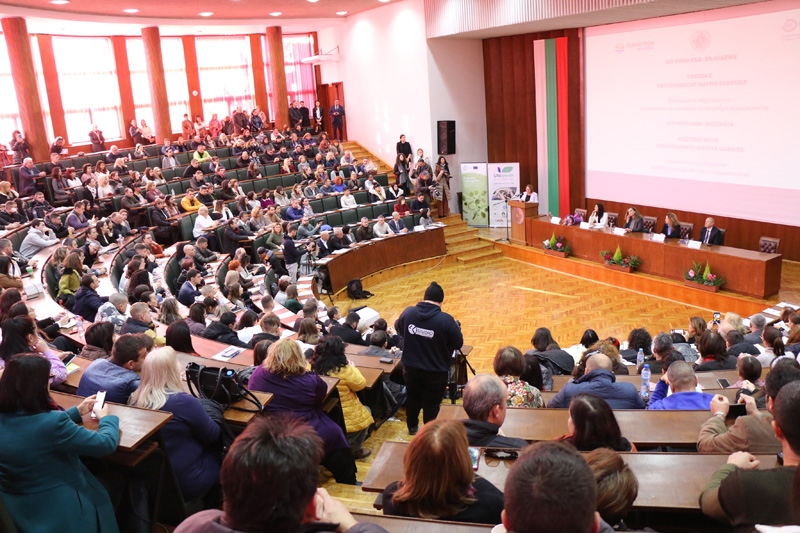
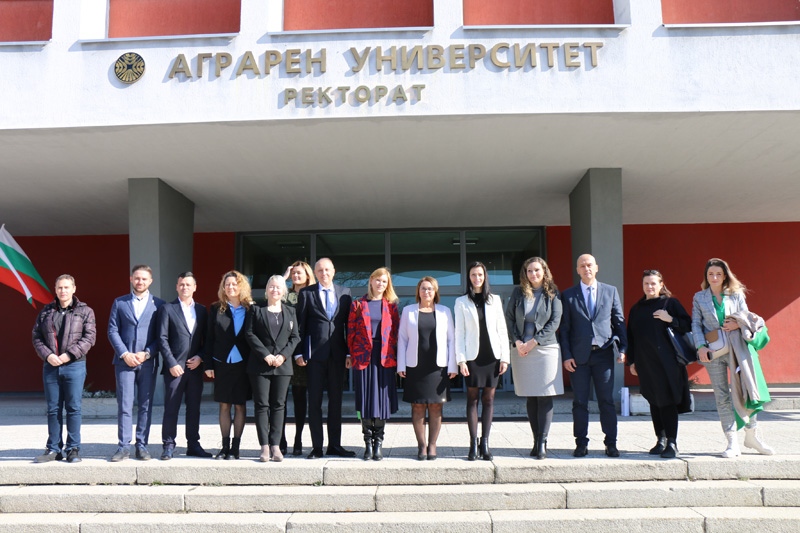
Last week, the LifeWatch Bulgaria consortium representative, the Agricultural University – Plovdiv, was thrilled to welcome the European Commissioner for Innovation, Scientific Research, Culture, Education and Youth, Mariya Gabriel, to its premises. The Commissioner held a meeting with students, teachers, innovators, young scientists, representatives of the European Institute for Innovation and Technology in Food (EIT Food) and citizens of Plovdiv on the theme of “Innovation and education – building synergy for better opportunities”.

In the European University Strategy, the leading initiative is the European University Alliances and their acquisition of status; there are currently 44 alliances, and the goal is for them to grow to 60 by 2024. Behind the 44 alliances are 340 universities from 31 countries and 1,300 partners: non-governmental organisations, local authorities, enterprises, noted Gabriel.

The Innovation Commissioner went on to underline that there is a difference between regions and member states in terms of science and innovation. Europe’s goal is to form 100 regional innovation consortia/hubs to connect and work towards a pan-European innovation system. For 70% of all companies in Europe, the first hurdle to growing businesses and investing in each location is finding people with knowledge, Gabriel said. According to her, the role of universities is to become a driving force. Plovdiv, she said, is a shining example for Europe because of the many innovative local ecosystems. It has set a goal of having 1,000,000 tech talents by 2025. “Europe needs investment in people with skills and talents in technology, for which I want to congratulate this wonderful university, which educates and develops the talents of future leaders in these fields every day” she commented.

The rector of the Agricultural University-Plovdiv, Professor Hristina Yancheva, drew attention to the fact that the university is a partner in the UNIgreen European University Alliance, and explained that the alliance is the first project in Europe for a “green” European university in agronomy, biotechnology, and natural sciences. As an excellent model for cooperation in the field of science, the rector highlighted the university’s membership and collaborative work of the LifeWatch Bulgaria consortium, which has been part of LifeWatch ERIC since the beginning of 2022.

LifeWatch ERIC at Transfiere 2023: session on green and blue growth

Transfiere 2023

As with all years, LifeWatch ERIC can be found at the 2023 edition of Transfiere, the European Forum for Science, Technology and Innovation. The Forum is held from Wednesday 15 February until Friday 17 February at the Malaga Trade Fair and Conference Centre (FYCMA).

Not only will the infrastructure be present with a booth, but the LifeWatch ERIC ICT-Core management team, together with coordinators of projects already underway at a global, European and regional levels, are developing an extensive programme of meetings to establish synergies for cooperation in the use of advanced digital tools for those interested in improving knowledge and eco-sustainable actions on biodiversity, and on the valuation of ecosystem services. LifeWatch ERIC promotes open access to data and resources in order to facilitate analysis efficiency and improve decision-making from public administrations, companies and citizens on climate change and for the preservation of biodiversity across the planet.

On the first day, Wednesday 15, within the Transfiere programme, LifeWatch ERIC will hold a session from 5pm–7pm, open to all participants, on ‘Green and Blue Growth through Technology Transfer, Digitisation and the 2030 Sustainable Development Goals (SDGs)’. Moderated by Juan Miguel González-Aranda, LifeWatch ERIC CTO, it entails the participation of five speakers on five interconnected themes:

Teófila Martínez, President of the Port of Cádiz and President of RETE, International Association of Port Cities and Ports. Her presentation will focus on the strategic vision of the blue economy.

Esperanza Caro, General Director of the Corporation of Municipal Companies of Seville (CEMS), and, from the Seville City Council, is the Spanish representative in the Ariane Cities Network for cooperation in the aerospace industry. In her presentation, she will present the SDGs in local economic development projects.

Rocío Moreno, Deputy Mayor of La Palma del Condado (Huelva) and Treasurer of the Andalusian Fund of Municipalities for International Solidarity Association (FAMSI). In her presentation, she will speak about Agroecology as a motor of development and cooperation.

María Ángeles Real, Deputy Vice-Rector for Scientific Infrastructure at the University of Malaga, where she is Professor of Cellular Biology. She will focus her presentation on publicising sustainable international projects in teaching.

Rohaifa Khaldi, Coordinator of the LifeWatch ERIC Artificial Intelligence Team and Researcher at the Andalusian Interuniversity Institute of Data Science and Computational Intelligence (DaSCI). She will dedicate her presentation to explaining the application of Artificial Intelligence in ecosystem services.

After the round of presentations, the second hour of the session will be dedicated to the debate on this entire thematic area, including participation and questions from the attendees.

The Transfiere 2023 programme includes more than 80 thematic panels, in which more than 400 experts will speak. More than 190 entities, companies and public administrations will be represented in the exhibition area. In the Research Centre space, more than 40 prototypes from research groups, technology centers and public companies will be displayed. In addition, in this event, more than 70 startups and spin-offs have been selected for relationships with international investment funds. The three days of Transfiere will see professionals representing more than 500 companies and entities from 39 countries.

Andalusian Government Commends LifeWatch ERIC as an Invaluable Ally in the Green Revolution

Green Revolution

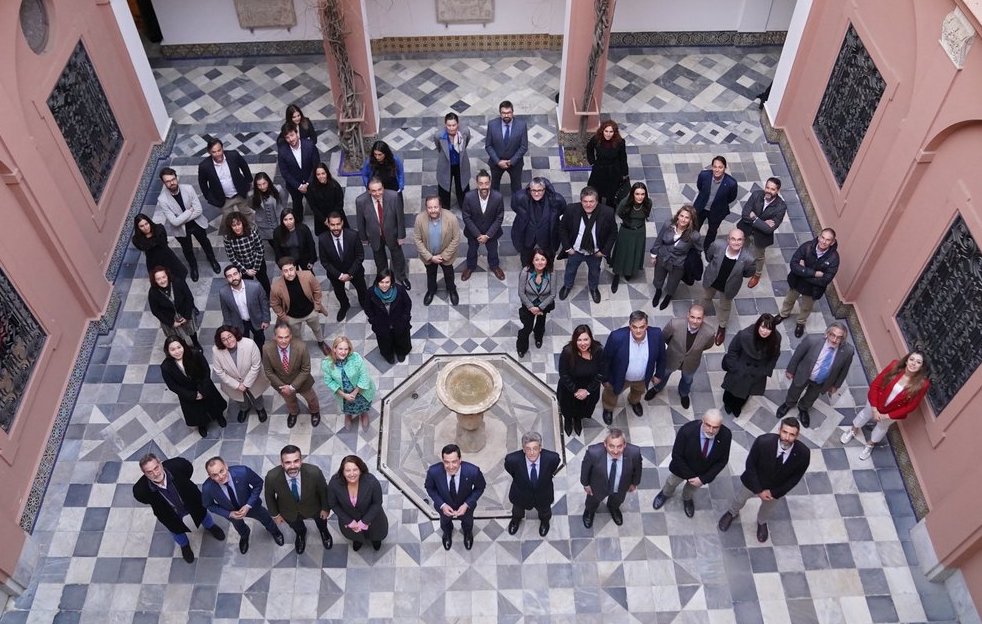
On Thursday 2 February, directors and representatives of the LifeWatch ERIC Common Facilities in Seville were welcomed to the government office of the Andalusian president, Juan Manuel Moreno Bonilla. LifeWatch ERIC members were invited for an afternoon at the beautiful Palacio de San Telmo in Seville with the President, who described the infrastructure as an “invaluable ally” in the Green Revolution, which is being widely promoted in the region.

The President praised the infrastructure for its open science model, through which it can provide advanced digital analysis tools to stakeholders for the conservation and restoration of biodiversity and ecosystem services, highlighting the synergies between the infrastructure and the regional Ministries of Sustainability, Environment and Blue Economy and that of Agriculture, Fisheries, Water and Rural Development, whose respective ministers, Carmen Crespo, and Ramón Fernández-Pacheco, were both present for the occasion. He underlined how the government can make use of LifeWatch ERIC’s expertise in cutting-edge technologies such as AI in a number of ERDF projects, which rely on digitisation and innovation processes to generate environmental knowledge, in order to foster a culture of sustainability.

Good examples include the SmartFood project, in which LifeWatch ERIC is collaborating with Ministry of Agriculture and a number of partners to launch its first nanosatellite this year, which will offer useful information to helpadvance the sustainability of agriculture and fisheries, contributing to the digitisation of the primary sector. Another fine example is the Índalo project, which proposes building a technological infrastructure from which to monitor environmental changes in Andalusia in order to define the most suitable measures for resource management.

LifeWatch ERIC is grateful to the president and the Andalusian government for the gesture of recognition, and is honoured to provide tools and services which can contribute to the betterment of the environment in the region.

You can watch the President’s speech here (in Spanish).